- Home
- Students
- House System
House System
Current Leaderboard
|
House Lovelace |
House Darwin |
House Dickens |
House Bridges |
4795 |
4147 |
6381 |
5695 |
Updated Every Monday
Our school operates a House System that encourages a sense of community, teamwork and positive behaviour across the school. All students are placed into one of four houses, each named after an inspirational figure who has made a significant impact on the world:
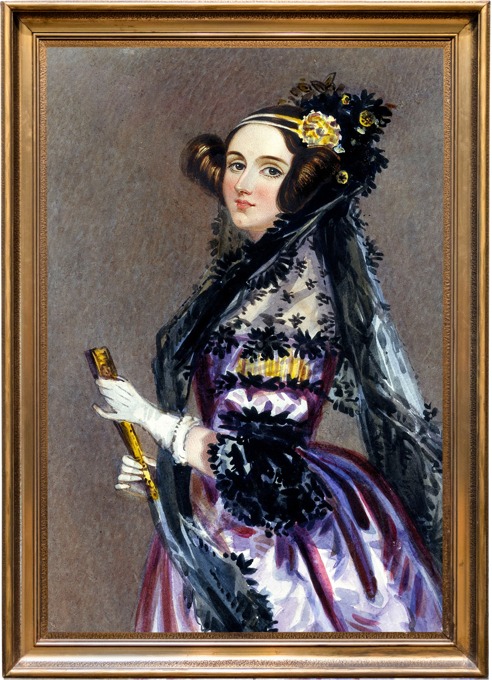
- Ada Lovelace
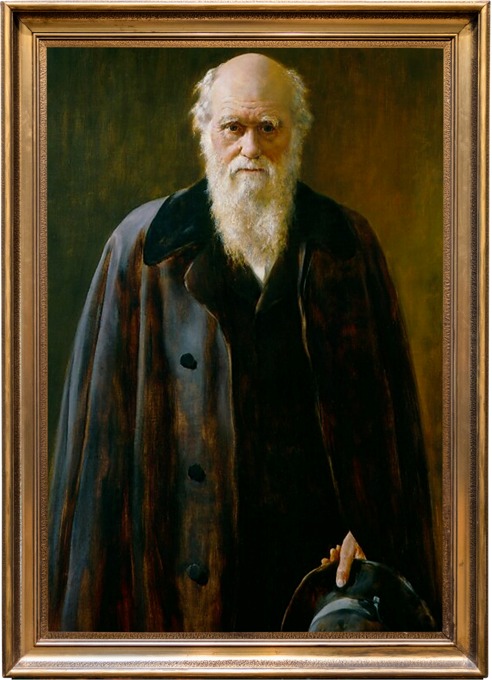
- Charles Darwin
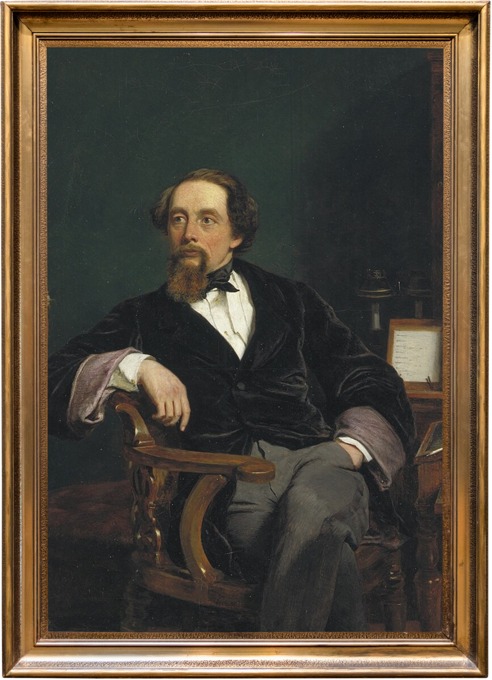
- Charles Dickens
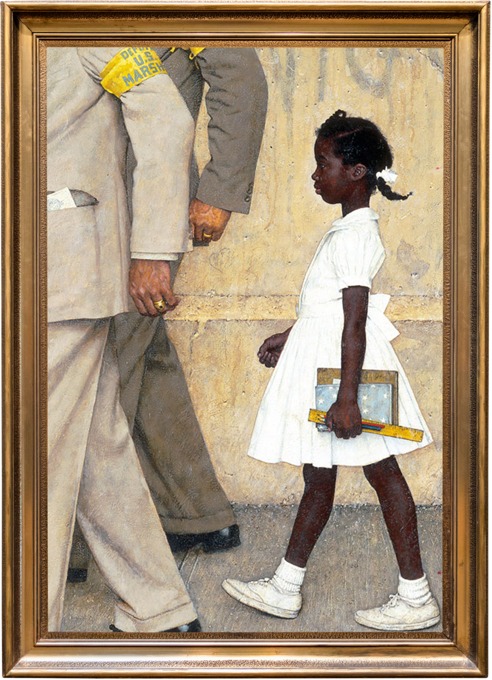
- Ruby Bridges
Each house is named after a remarkable individual whose achievements continue to inspire people today. Ada Lovelace is widely recognised as the world’s first computer programmer and a pioneer in the field of computing. Charles Darwin was a renowned naturalist whose work on evolution changed our understanding of the natural world. Charles Dickens was one of Britain’s greatest authors, known for his powerful storytelling and his commitment to highlighting social issues. Ruby Bridges is a civil rights activist who, as a young child, played a historic role in the desegregation of schools in the United States and continues to inspire people with her courage and determination.
Throughout the school year, students can earn house points by attending school regularly, demonstrating positive behaviour, working hard in lessons and contributing to school life. These points contribute to their house’s overall total and help foster a healthy sense of friendly competition.
The House System allows students of different ages and classes to work together, celebrate achievements and build pride in their house. At regular points during the year, houses are recognised and rewarded for their efforts, encouraging students to support one another and strive for success both in and out of the classroom.
Every student is issued a House badge to wear on their blazer. These badges must be worn every day and will become part of our uniform checks. They will be £1.50 to replace if lost which students can buy from Reception or via ParentPay.
 Ada Lovelace (1815-1852) was an English mathematician, an associate of Charles Babbage, for whose prototype of a digital computer she created a program. She has been called the first computer programmer.
Lovelace was deeply intrigued by Babbage’s plans for a tremendously complicated device he called the Analytical Engine. It was never built, but the design had all the essential elements of a modern computer. The Analytical Engine remained a vision, until Lovelace’s notes became one of the critical documents to inspire Alan Turing’s work on the first modern computers in the 1940s. Her thwarted potential, and her passion and vision for technology, have made her a powerful symbol for modern women in technology.
Certainly she was the first to express the potential for computers outside mathematics. The early programming language Ada was named for her.
“Mathematical science shows what is. It is the language of unseen relations between things. But to use and apply that language, we must be able to fully to appreciate, to feel, to seize the unseen, the unconscious.”
― Ada Lovelace
 Charles Darwin (1809-1882) was an English naturalist whose scientific theory of evolution by natural selection became the foundation of modern evolutionary studies. Darwin formulated his bold theory in private in 1837–39, after returning from a 18-month voyage around the world aboard HMS Beagle, but it was not until two decades later that he finally gave it full public expression in On the Origin of Species (1859), a book that has deeply influenced modern Western society and thought.
To this day the theory of evolution by natural selection is accepted by the scientific community as the best evidence-based explanation for the diversity and complexity of life on Earth. The theory proposes that the ‘fittest’ individual organisms - those with the characteristics best suited to their environment - are more likely to survive and reproduce. They pass on these desirable characteristics to their offspring.
Charles Darwin is celebrated as one of the greatest British scientists who ever lived.
“It is not the strongest of the species that survives, not the most intelligent that survives. It is the one that is the most adaptable to change.”
― Charles Darwin
 Charles Dickens (1812-1870) was an English novelist, generally considered the greatest of the Victorian era. His many volumes include such works as A Christmas Carol, David Copperfield, Bleak House, A Tale of Two Cities, Great Expectations, and Our Mutual Friend.
He was indeed very much a public figure, actively and centrally involved in his world, and a man of confident presence. He was reckoned the best after-dinner speaker of the age; other superlatives he attracted included his having been the best shorthand reporter on the London press and his being the best amateur actor on the stage.
Dickens is remembered as one of the most important and influential writers of the 19th century.
“The most important thing in life is to stop saying, ‘I wish’ and start saying, ‘I will’. Consider nothing impossible, then treat possibilities as probabilities.”
― Great Expectations by Charles Dickens
 Ruby Bridges (1954) is an American activist and leader who became a symbol of the civil rights movement and who was, at age six, the youngest of a group of African American students to integrate schools in the American South.
Ruby Bridges has always been a civil rights advocate, with her experience as the first Black child to enter an all-white school in the South making her a household name. Though her experience in school was harrowing due to blatant racism and the targeting of her family, Bridges never missed a day of school. Presently, the Ruby Bridges Foundation and Bridges herself continue to host speaking engagements and write children’s books to strive for an end to racism in America.
“All of us are standing on someone else’s shoulders. Someone else that opened the door and paved the way. And so, we have to understand that we cannot give up the fight, whether we see the fruits of our labor or not. You have a responsibility to open the door to keep this moving forward.”
― Ruby Bridges